
By: Caleb Oswari, MBA and Dr. Andrew Oswari, MD
What if the key to unlocking better health was already inside you, and the only thing standing in the way was a hidden condition that many people don’t even know they have? Insulin resistance is a condition that affects millions of people, often without their knowledge. It quietly disrupts the body’s ability to regulate blood sugar, increasing the risk of serious diseases such as type 2 diabetes, heart disease, and liver complications. The good news is that insulin resistance is preventable and, in many cases, reversible with the right approach. In this article, we’ll explore what insulin resistance is, how it develops, and how you can manage your metabolic health to prevent its long-term effects.
Understanding Blood Sugar Regulation1
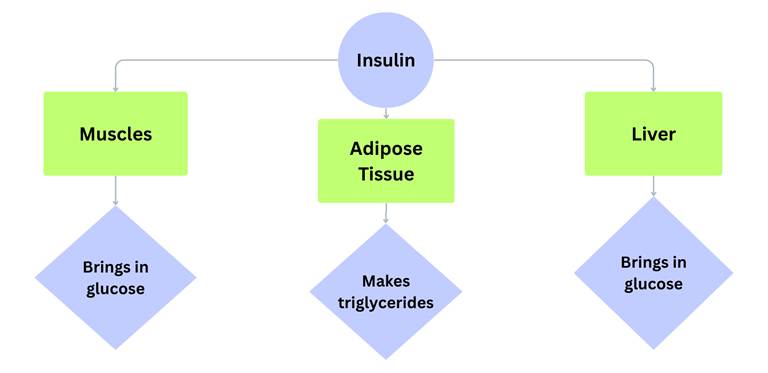
The liver, skeletal muscle, and adipose (fat) tissue all play critical roles in regulating blood sugar levels, working together to maintain glucose balance in the body. The liver is the body’s primary site for sugar (glucose) storage. Similarly, skeletal muscles are another storage site, which they primarily use for energy during physical activity. When both the liver and muscles are full of glucose, adipose tissues convert excess sugar into triglycerides, storing it in fat. Together, these tissues help ensure that glucose is stored appropriately and released when necessary, maintaining a balanced blood sugar level under normal conditions.
What is the Role of Insulin?
Insulin is a hormone produced by the pancreas that plays a crucial role in regulating blood sugar levels in the body. After you eat, insulin is released into the bloodstream to help move glucose into the liver and muscles, where it can be stored and used for energy. The diagram below illustrates how insulin supports glucose regulation in these key tissues in a healthy individual2.
Because insulin signals the body to store energy rather than use it, the body cannot burn fat for energy in the presence of insulin. This prevents the body from tapping into fat reserves as a fuel source3. Over time, if insulin is constantly elevated, the body becomes less responsive to its signals, making it harder to break down fat for energy. This is known as insulin resistance. Think of insulin like a phone notification that tells your cells to take in sugar from the blood. At first, your cells respond quickly, just like you would to a new message. But over time, if your body keeps sending the same signal too often, your cells start to ignore it, just like you would eventually tune out repeated notifications, leading to insulin resistance and rising blood sugar levels. This can lead to an increase in fat storage and a decrease in the body’s ability to use stored fat for fuel.
How Insulin Resistance Develops4
Insulin resistance can develop gradually and is influenced by several factors, including obesity, physical inactivity, a highly-processed diet, and aging.
Obesity: Excess fat, especially abdominal (visceral) fat, triggers insulin resistance. Adipose tissue releases hormones and inflammatory markers that can interfere with insulin signaling.
Physical Inactivity: Lack of exercise decreases the muscles’ ability to use glucose effectively, contributing to insulin resistance.
Highly-Processed Diet: Diets high in refined carbohydrates, sugars, and unhealthy fats can promote insulin resistance.
Aging: As we age, our muscle mass tends to decrease. Muscles are critical for glucose uptake, and with less muscle mass, the body has fewer tissues available to absorb glucose. As a result, blood sugar levels rise, and insulin resistance becomes more pronounced.
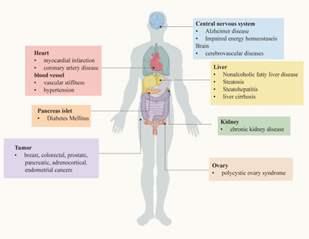
If left unchecked, insulin resistance can lead to a host of long-term complications. The most common and severe outcome is the development of type 2 diabetes. In diabetes, the pancreas can no longer keep up with the increased demand for insulin, leading to chronically high blood sugar levels. Over time, this damages blood vessels, nerves, and organs, contributing to complications such as kidney disease, vision loss, and amputations.
Long-Term Complications of Insulin Resistance5
Insulin resistance also plays a major role in cardiovascular disease. It is responsible for about 40% of myocardial infarctions (heart attacks) and is the leading cause of coronary artery disease5. Elevated blood sugar levels, combined with the accumulation of fat in the liver and elsewhere, contribute to the development of plaque in the arteries, which can obstruct blood flow and increase the risk of heart attacks and strokes.
Prevention and Management of Insulin Resistance

Another significant complication is nonalcoholic fatty liver disease. Insulin resistance disrupts the liver’s ability to regulate fat storage and breakdown, leading to the accumulation of fat in the liver. This condition can progress to liver inflammation, cirrhosis, and even liver failure if not addressed. Insulin resistance is also a key component of metabolic syndrome, a cluster of conditions that includes obesity, high blood pressure, and abnormal lipid levels, all of which increase the risk of cardiovascular disease and type 2 diabetes.
Fortunately, insulin resistance can often be prevented or reversed through lifestyle changes. A healthy, balanced diet rich in nutrient-dense foods, fiber, and healthy fats can help regulate blood sugar levels and improve insulin sensitivity. Less consumption of snacks and processed carbohydrates helps keep blood sugar levels down. It’s important to avoid foods that cause rapid spikes in blood sugar, such as refined sugars and processed carbohydrates. Regular physical activity is equally crucial, as exercise helps muscles become more responsive to insulin, allowing them to absorb glucose more efficiently. Studies have shown that just 20-30 minutes of moderate activity after eating can prevent spikes in blood sugar6,7.
By understanding how insulin works in the body, how resistance develops, and the long-term complications it causes, individuals can take proactive steps to manage their health. In some cases, working with a healthcare provider, such as a functional nutritionist or physician, can help individuals better understand their metabolic health and create a personalized plan for reversing insulin resistance. If you’re concerned about your metabolic health or want to learn more about how to reverse insulin resistance,the Chung Institute of Integrative Medicine can help you develop a personalized plan to improve your insulin sensitivity and overall well-being.
References:
Moffat, J. R., & Schneider, M. F. (2023). Insights into the regulation of metabolic pathways in skeletal muscle during exercise and metabolic disease. Journal of Molecular and Cellular Biology, 45(3), 195-207. https://doi.org/10.1093/jmcb/mjad073
Lee, S.-H., Park, S.-Y., & Choi, C. S. (2022). Insulin resistance: From mechanisms to therapeutic strategies. Diabetes & Metabolism Journal, 46(1), 15–37. https://doi.org/10.4093/dmj.2021.0280
Belfort, R., & Harrison, D. (2018). Obesity, insulin resistance, and nonalcoholic fatty liver disease. JAMA Internal Medicine, 178(4), 512-514. https://doi.org/10.1001/jamainternmed.2018.2933
Osborn, O., & Olefsky, J. M. (2012). The cellular and signaling networks linking the immune system and metabolism in disease. Annals of the New York Academy of Sciences, 1261(1), 45–52. https://doi.org/10.1111/nyas.13435
Cleveland Clinic. (n.d.). Insulin resistance: What it is, causes, symptoms & treatment. https://my.clevelandclinic.org/health/diseases/22206-insulin-resistance
Zhao, X., An, X., Yang, C., Sun, W., Ji, H., & Lian, F. (2023). The crucial role and mechanism of insulin resistance in metabolic disease. Frontiers in Endocrinology, 14, 1149239. https://doi.org/10.3389/fendo.2023.1149239
Wellgen Health. (2024, November 19). How to boost your metabolic health for a healthier life. https://wellgen.uk/how-to-boost-your-metabolic-health-for-a-healthier-life/